Instructions
In the game of Lucky Sevens, the player rolls a pair of dice. If the dots add up to 7, the player wins $4; otherwise, the player loses $1.
Suppose that, to entice the gullible, a casino tells players that there are lots of ways to win: (1, 6), (2, 5), and so on. A little mathematical analysis reveals that there are not enough ways to win to make the game worthwhile; however, because many people’s eyes glaze over at the first mention of mathematics, your challenge is to write a program that demonstrates the futility of playing the game.
Your program should take as input the amount of money that the player wants to put into the pot, and using a random number generator play the game until the pot is empty. At that point, the program should print:
- The number of rolls it took to break the player
- The maximum amount of money in the pot.
An example of the program input and output is shown below:
How many dollars do you have? 50

You are broke after 220 rolls.
You should have quit after 6 rolls when you had $59.
This program implements logic to create semi-random results. The example above is one in many possible scenarios.
Flowchart
To enlarge flowchart turn side navigation off, Click on  in the top navigation bar to change to
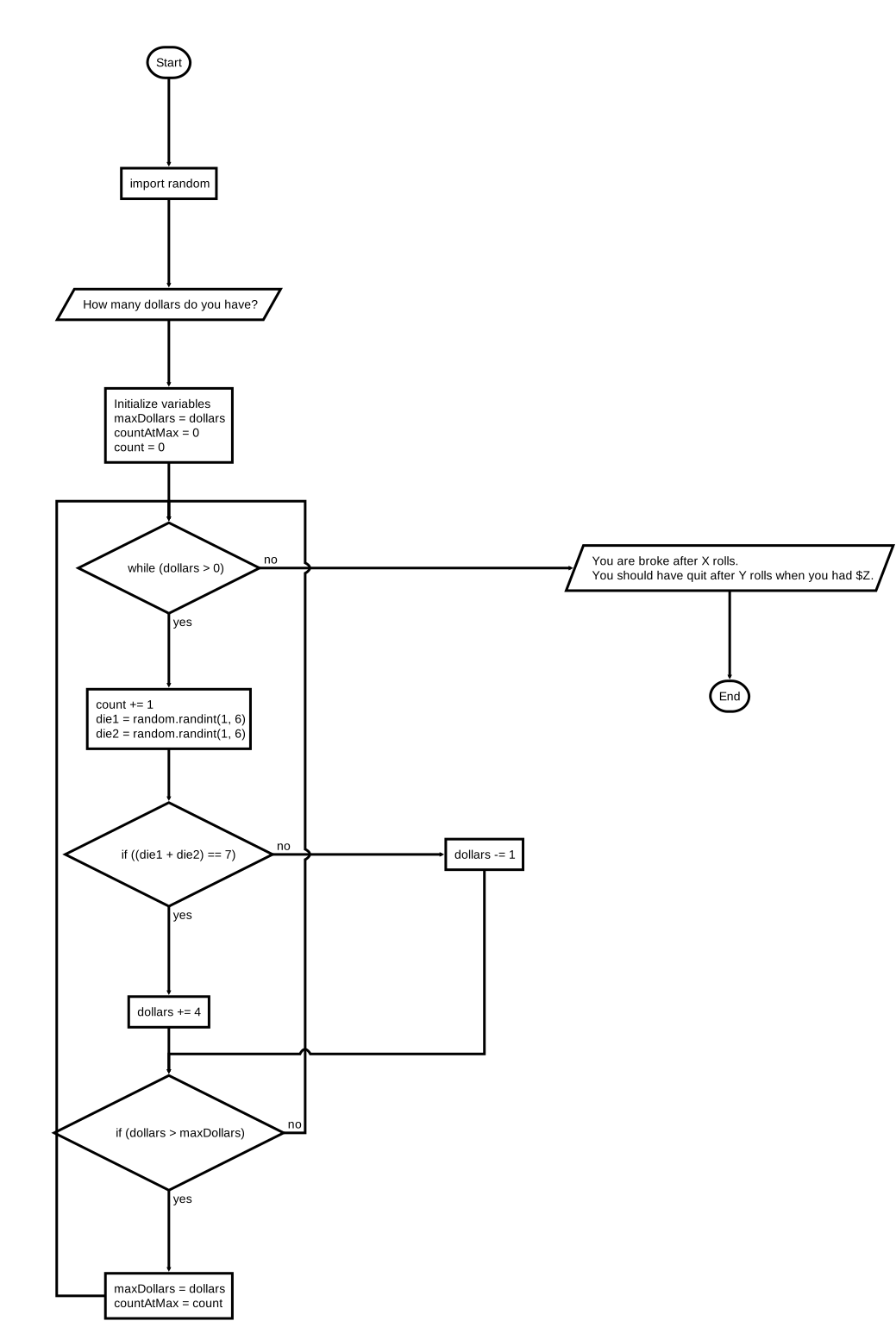
Starter Code
"""
Program: sevens.py
Project 3.11

Simulate the game of lucky sevens until all funds are depleted.

1) Rules:
       roll two dice
       if the sum equals 7, win $4, else lose $1
2) The input is:
       the amount of money the user is prepared to lose
3) Computations:
       use a random number generator to simulate rolling the dice
       loop until the funds are depleted
       count the number of rolls
       keep track of the maximum amount
4) The outputs are:
       the number of rolls it takes to deplete the funds
       the maximum amount

"""
# import module

# Request the input

# Initialize variables

# Loop until the money is gone

    # Roll the dice

    #Calculate the winnings or losses

    #If this is a new maximum, remember it


# Display the results