Instructions
Modify the guessing-game program so that the user thinks of a number that the computer must guess.
- The computer must make no more than the minimum number of guesses, and it must prevent the user from cheating by entering misleading hints.
- Use I’m out of guesses, and you cheated and Hooray, I’ve got it in X tries as your final output.
(Hint: Use the math.log function to compute the minimum number of guesses needed after the lower and upper bounds are entered.)
Below are two test runs of the program:
Enter the smaller number: 0
Enter the larger number: 10

0 10
Your number is 5
Enter =, <, or >: <
0 4
Your number is 2
Enter =, <, or >: >
3 4
Your number is 3
Enter =, <, or >: =
Hooray, I've got it in 3 tries!
Enter the smaller number: 0
Enter the larger number: 50
0 50
Your number is 25
Enter =, <, or >: <
0 24
Your number is 12
Enter =, <, or >: <
0 11
Your number is 5
Enter =, <, or >: <
0 4
Your number is 2
Enter =, <, or >: <
0 1
Your number is 0
Enter =, <, or >: >
1 1
Your number is 1
Enter =, <, or >: >
I'm out of guesses, and you cheated!
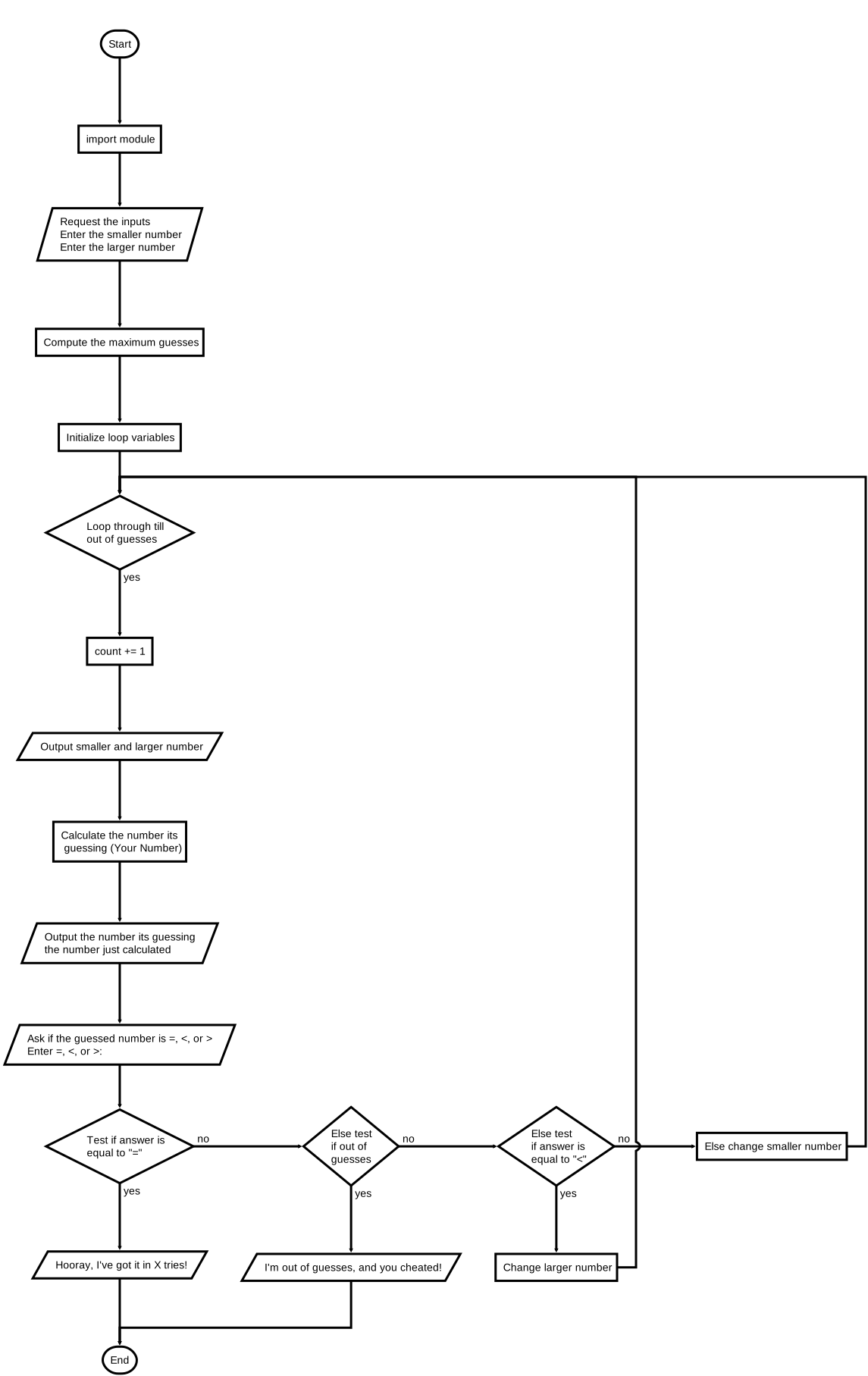
Flowchart
To enlarge flowchart turn side navigation off, Click on  in the top navigation bar to change to
Starter Code
"""
Program: guess.py
Project 3.3

The computer guesses the user's number using the minimum
number of attempts and prevents cheating by the user.
"""

import random

smaller = int(input("Enter the smaller number: "))
larger = int(input("Enter the larger number: "))
myNumber = random.randint(smaller, larger)
count = 0
while True:
    count += 1
    userNumber = int(input("Enter your guess: "))
    if userNumber < myNumber:
        print("Too small")
    elif userNumber > myNumber:
        print("Too large")
    else:
        print("You've got it in", count, "tries!")
        break